Thursday, June 27, 2013

Carpet Making in Yazd

     The city of Yazd has a long tradition in the textile industry. This is probably due to the fact that it was located along the Silk Road and was therefore was exposed to the materials and crafts. There was a time when a loom could be found in living areas of every household and its skills were passed down from generation to generation. The people of Yazd were able to adapt from just making hand woven to employing machines made weaving into carpet making. The designs in Yazd Persian rugs were also easily adaptable. They rugs began with images as Herat, ground in blue and chequer, but have since adapted into Kerman rug designs as well as Isfahan and Kashan styles. This adaptation of Kerman rug designs has led to Yazd market new designs that are of a finer weave, in better colors, and with an increased pile density.
 The textile industry has a huge influence not only on the economy in the city of Yazd but also in Iran as it is one of Iran's largest industrial centers. The reputation of the carpets from Yazd is that they are of a fine quality and are available in large sizes.
 Main Street Oriental Rugs in historic Ellicott City has a few rugs from Yazd on sale.
           

Carpet Weaving in India and Iran

     Carpet Weaving is most predominant in India and Iran. Both of these regions have a strong hold on the Persian and Persian-designed rug industry. However, both have had to adapt to economic crises at home and abroad.
     Carpet weaving in India has been around for hundreds of years. The two main carpet weaving districts are the city of Varanasi ,which is located in east-central India, and Jaipur, which is located southwest of Delhi. The weavers use Persian designs in their carpets. The most prominent are: Mahal, Herez, Bijar, Tabriz, Kashan, Sarouk, Aubusson, and Shirvan. The recent economic crisis has affected the carpet weavers in India as wages for them are in a slump.
     Carpet weaving in Iran has been a huge industry as it has been the source of designs. Because of this, Iran has gotten the reputation for being the best in Oriental rugs. The production of carpets in Iran range from Shiraz, Kurd, Hamaden, and Herez to finer qualities such as Tabriz and Nain. Persian rug prices were at an all time high in the early 1980's when it was believed that the Iranian Revolution would discontinue carpet exports. However, since then prices dropped and for quite some time so did demand which led a lot of weavers in Iran to abandon the trade. But recently, weavers have gone back   to their profession as there has been a surge in demand and a huge decrease in the value of Iran's currency the rial. Iranian producers still claim that Iran is the largest exporter of Oriental rugs with over 70 percent of its exports landing in over 50 countries.
The price of oriental rugs have not increased over the past few years.
             

Symbolism in Oriental Rugs

     Oriental rugs have been made for hundreds of years and since the very beginning there has been symbolism in them. This symbolism can derive from religion, nature, or culture. The Pazyryk Rug, the oldest rug ever to be discovered, contains many symbolic images. For example, the small border that contains grazing elk is thought to symbolize longevity.
     Other animals are used in oriental rugs to symbolize certain attributes. The lion represents power, the leopard represents bravery, the dove represents peace, etc. One of the most iconic symbols in oriental rugs is the "Tree of Life". The design is the oldest symbol, predating Christianity and Islam, and represents understanding and truth.
     Although symbols can still be found in oriental rugs, they have been increasingly losing their historical significance as people have forgotten the meaning behind the symbolic patterns. When you are purchasing an oriental rug,you are not just buying a piece of art but also a piece of history.
    At Main Street Oriental Rugs, we would like to educate our customers to know what they are purchasing and what is the history behind purchasing the rugs from Main Street Oriental Rugs in Ellicott City.
                     

Friday, June 21, 2013

New World Record for Most Expensive Carpet

During the highly anticipated sale of Important Carpets from the William A. Clark Collection a 6'5" by 8'9" Kerman sickle-leaf, vine scroll and palmette ‘vase-technique’ carpet was sold for $33,765,00.  This massive auction price topples the old record of $9.5 million, set by another 17th century Kerman vase carpet in 2010. The William A. Clark Collection was hosted by the Corcoran Gallery of Art on June 5th at Sotheby’s New York.


Wednesday, June 12, 2013

Beneath the Rug .... The Pad

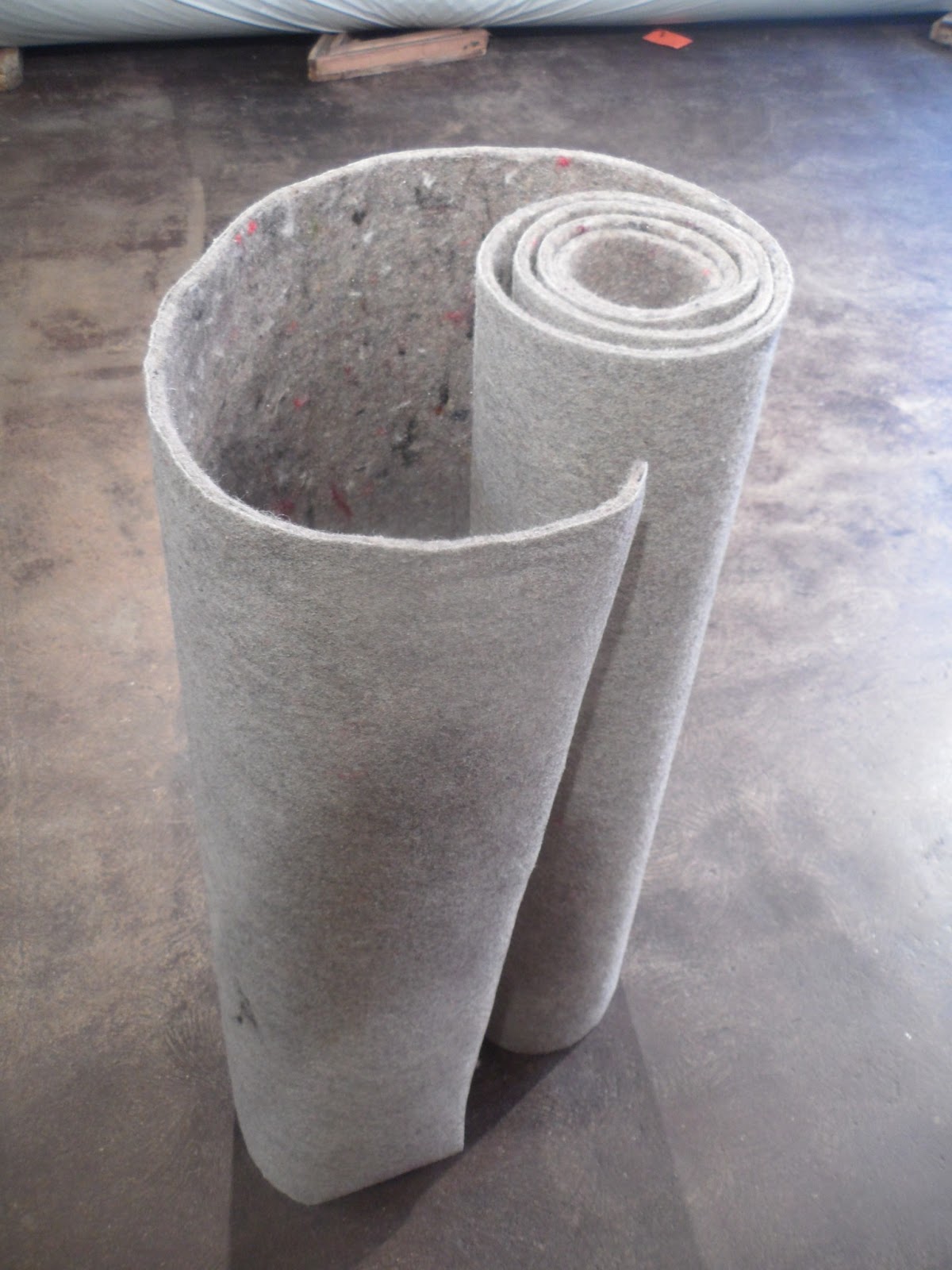
After someone is done choosing a rug to buy, little thought is given to the type of pad used to cushion it and hold it to the floor.  Here at Main Street Oriental Rugs, we take pride in offering a variety of pads that allow our customers to make their perfect rug work at its full potential in their home.  We currently offer multiple varieties of rug padding including grippy No-Muv, thick and soft MSM, and ultra-thin Teebaud.  Each one of these types has a different purpose that fits best with different environments.  Whether you are looking for luxury softness or supreme skid resistance, Main Street Oriental Rugs has the perfect pad for your rug.